Built to win
championships.
Sold to ride
to work.
The BMW S1000RR was designed in secret for a World Superbike grid, then handed to the public a year later. Everything about the current bike — the winglets, the electronics, the ShiftCam engine — still traces back to a racetrack. This is the current model, and the seventeen years of engineering that built it.
current US-spec output
A bike that changed what a "superbike" was allowed to be
BMW had never built an inline-four before this machine existed. Nine years later, its homologation special was setting outright lap records at the Isle of Man. Here's what made each step revolutionary rather than incremental.
Safety first, on purpose
At launch, the S1000RR was the first litre-class production superbike to come from the factory with standard Race ABS and Dynamic Traction Control — at a time when rivals treated rider aids as an afterthought, if they offered them at all.
A camshaft that changes shape
The second-generation engine introduced BMW ShiftCam: the entire intake camshaft physically slides sideways at 9,000 rpm to swap valve timing and lift profiles — one of the most mechanically ambitious valve trains ever fitted to a production superbike.
The title that took 15 years
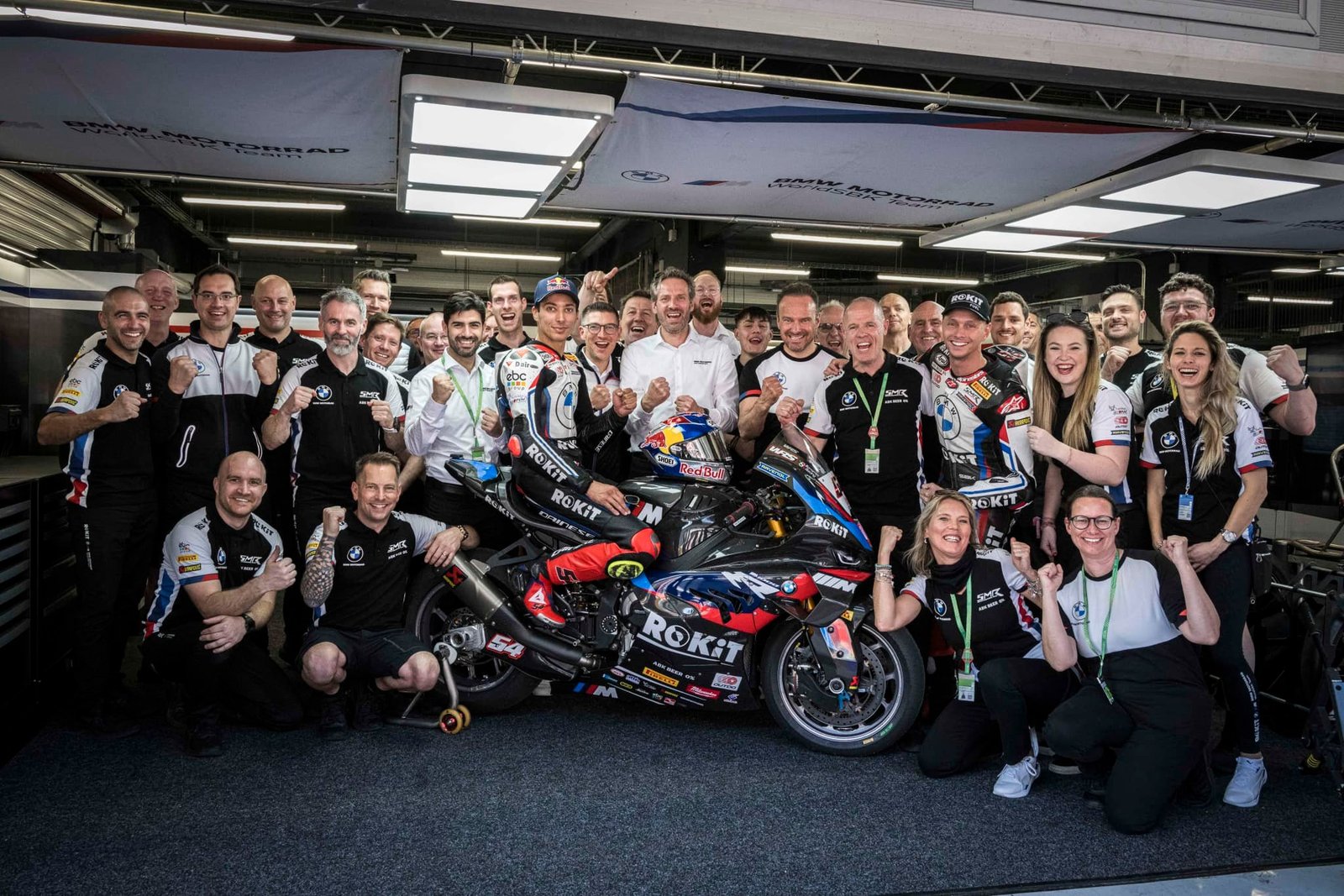
BMW entered World Superbike in 2009 and didn't win the riders' championship until 2024. Toprak Razgatlıoğlu then defended it in 2025 — back-to-back titles on the M 1000 RR, in his final two seasons before moving to MotoGP.
Four generations, one bloodline
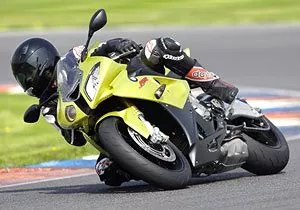
The provocation
193 hp, an asymmetric face nobody asked for, and a set of electronics that embarrassed established superbike makers.
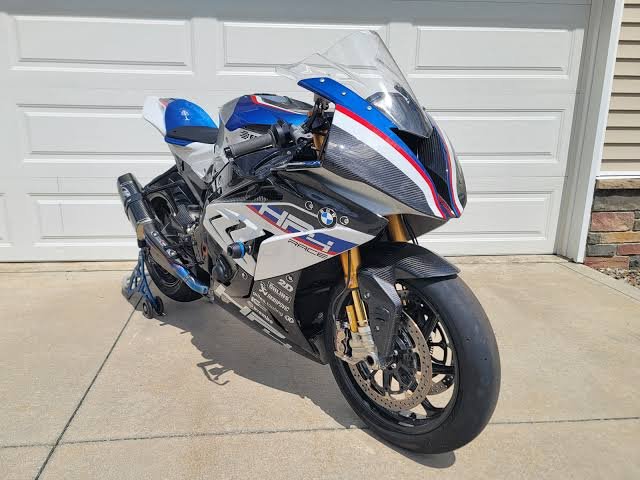
The refinement
Lighter, faster-revving, and capped off by the carbon-monocoque HP4 Race — 750 units, 146 kg, sold out worldwide.
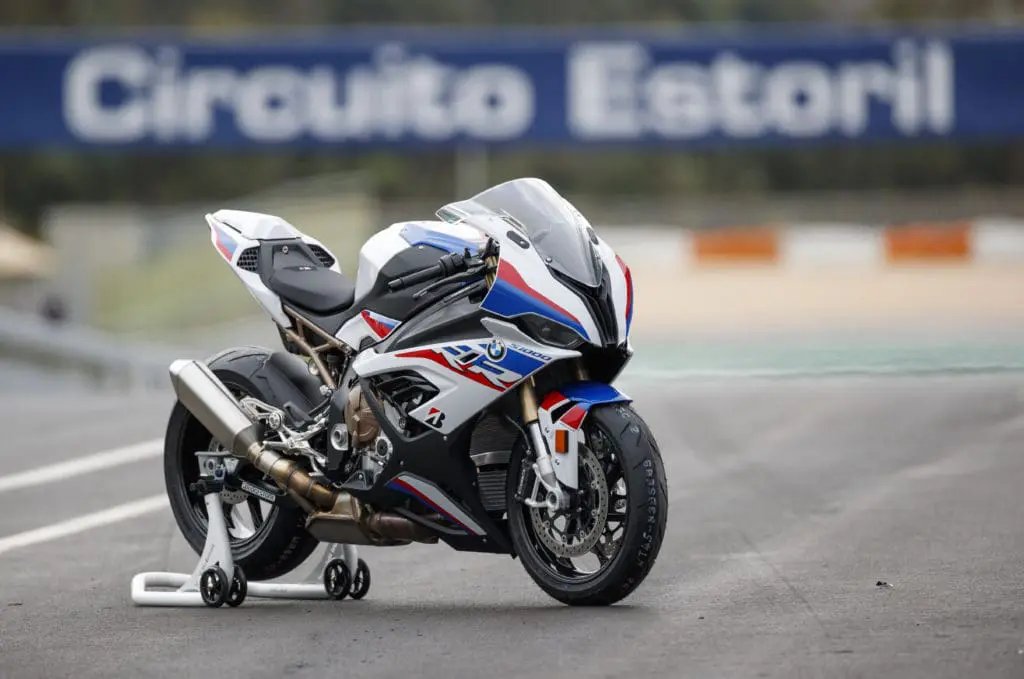
The reinvention
All-new ShiftCam engine, symmetrical LED face, and — from 2023 — aero winglets borrowed straight from the M 1000 RR.
ShiftCam: one engine pretending to be two
Below 9,000 rpm, the S1000RR runs a mild, efficient cam profile built for rideability and fuel economy. Cross that threshold and an actuator physically slides the camshaft sideways — in 10 milliseconds — onto a completely different, high-lift lobe built for outright top-end power.
It's the same core idea BMW introduced on the R 1250 GS boxer engine, adapted to a screaming inline-four. The result: more low-down torque for the road, and more peak power for the track, from the same 999cc.
Explore the engineering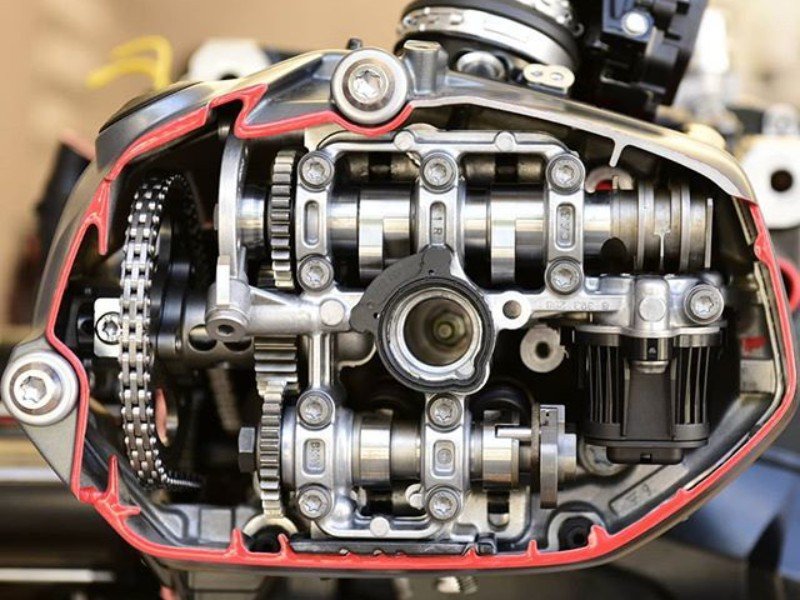
136.358 mph. The fastest lap ever recorded at the Isle of Man TT — on a BMW M 1000 RR.
Peter Hickman set it in 2023, beating his own 2018 record of 135.452 mph, which he'd set on the previous-generation S1000RR. Both records still stand today. Meanwhile on the world stage, Toprak Razgatlıoğlu delivered BMW's first-ever WorldSBK riders' title in 2024, then defended it in 2025.
Read the full racing recordThe homologation special: M 1000 RR
In 2021, BMW's M division built its first-ever motorcycle — not a comfort or luxury exercise, but a homologation special engineered purely to satisfy World Superbike's production-based rulebook. It remains the fastest, lightest, most track-focused RR you can register for the road.